

A winter driving kit becomes valuable before the moment you need it. In Alberta, the right supplies can help you stay warm, remain visible, communicate your location and make safer decisions while waiting for assistance.
Why Alberta Drivers Need More Than a Basic Kit
Calgary winters can bring extreme cold, heavy snowfall, ice and sudden weather changes associated with Chinook conditions. A short city drive can also turn into a long delay when traffic slows, roads close or a vehicle stops running.
Your Alberta winter emergency car kit should match where you travel. Someone commuting within Calgary may need enough supplies to remain safe during a delayed response. A driver travelling between Calgary, Chestermere, Langdon, Strathmore or another Alberta community should prepare for longer distances, limited shelter and changing highway conditions.
The City of Calgary recommends winter tires, a healthy battery, suitable antifreeze, working windshield wipers and a stocked vehicle emergency kit. Drivers should also tell someone their route and expected arrival time before travelling in severe conditions. (https://www.calgary.ca)
Pack Supplies That Serve a Clear Purpose
A useful kit is easier to build when every item supports one of four needs: warmth, communication, visibility or vehicle recovery.
Warmth, Food and Personal Safety
Cold becomes the immediate concern when a vehicle cannot provide reliable heat. Pack enough supplies for the people who regularly travel in the vehicle.
Include:
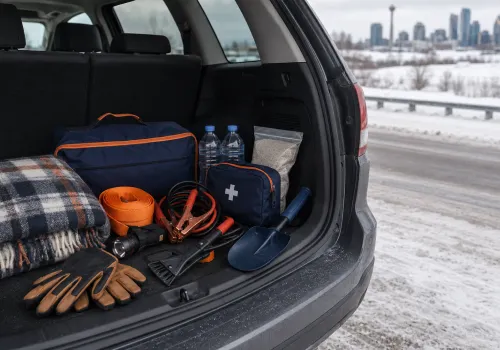
- Warm blankets or compact emergency blankets
- A toque, insulated gloves and warm socks
- Winter boots or suitable footwear
- Extra layers of clothing
- Chemical hand and foot warmers
- Non-perishable food such as energy bars or nuts
- Water in plastic bottles
- A properly stocked first aid kit
- Any essential personal medication
Plastic bottles are less likely than glass to break when water freezes. The Government of Canada recommends replacing stored emergency water every six months and including a first aid kit with a seatbelt cutter. (Canada)
Do not assume your everyday clothing is enough because you plan to move between heated buildings. Dress and pack for the possibility that the vehicle will not start, the heater will stop working or help will take longer during a widespread cold-weather event.
Communication and Location Information
A phone is useful only while it has power and a reliable signal. Keep a charging cable in the vehicle and carry a charged power bank for longer journeys.
Your communication supplies should include:
- A mobile phone and compatible charging cable
- A regularly charged portable battery pack
- A whistle
- A flashlight with spare batteries
- A paper map for rural or unfamiliar routes
- Written emergency contacts
- Your roadside provider’s phone number
- A pen and small notepad
Before leaving Calgary on a longer route, tell someone where you are going, which road you expect to use and when you should arrive. Transport Canada also recommends travelling with a fully charged phone and considering a battery pack for extended trips. (Transport Canada)
When requesting assistance, provide your exact location, direction of travel, nearest exit or intersection, vehicle description and the number of people waiting. A dropped map pin can be especially helpful on rural roads or highways.
Visibility and Roadside Protection
Snow, darkness and reduced visibility can make a disabled vehicle difficult for approaching drivers to see.
Carry:
- Reflective warning triangles
- A battery-powered warning light
- A reflective vest
- A bright flashlight
- An ice scraper and snow brush
Place warning equipment only when you can do so without entering moving traffic or walking on an unsafe surface. If the vehicle is exposed to fast-moving traffic, remain in a safer location and contact emergency services when there is an immediate danger.
Transport Canada recommends warning lights, reflective triangles or road flares as part of a winter supply kit. It also advises drivers to clear snow from the roof, hood, windows and lights before travelling. (Transport Canada)
Snow, Traction and Vehicle Supplies
A small amount of snow around the tires may be manageable when you have suitable tools. Deeper snow, a ditch, steep ground or an unsafe roadside position may require professional assessment.
Keep the following in the vehicle:
- A compact shovel with a practical handle
- Traction mats
- Sand or non-clumping cat litter
- Booster cables or a charged portable booster
- Extra winter windshield washer fluid
- Paper towels or rags
- A small tool kit
- Spare fuses appropriate for your vehicle
- A fire extinguisher rated for vehicle use
Know how to use every item before an emergency occurs. Booster cables connected incorrectly can damage electrical systems or create a safety risk. Recovery straps and tow ropes should not be attached to unknown points on a vehicle, and you should never crawl beneath a vehicle supported only by snow or an unstable jack.
Alberta’s winter highway guidance recommends carrying a shovel, booster cables, traction material, extra clothing, emergency food, a flashlight and a first aid kit. (Alberta.ca)
Prepare the Vehicle Before Packing the Trunk
Emergency supplies cannot replace basic vehicle preparation. Before winter, inspect or arrange an inspection of the:
- Battery and charging system
- Winter tires and spare tire
- Tire pressure
- Brakes
- Antifreeze and cooling system
- Belts and hoses
- Heater and defroster
- Windshield wipers
- Exterior lights
Transport Canada recommends winter tires on all wheels because their softer rubber and tread design provide better traction in cold, snowy and icy conditions than all-season tires. Alberta also advises checking the spare tire and keeping the fuel tank more than half full. (Alberta.ca)
For an electric vehicle, begin winter trips with enough range for delays, detours and reduced cold-weather performance. Confirm charging locations before travelling outside the city. (Transport Canada)
Check Alberta Road Conditions Before Leaving
Use Alberta 511 to review road surfaces, visibility, closures, incidents, weather alerts and available traffic cameras. A road marked Travel Not Recommended is considered unsuitable for non-essential travel and may be impassable because of weather, visibility or surface conditions. (511 Alberta)
A No Report designation does not confirm that the road is clear. It only means a current condition report is unavailable. (511 Alberta)
Postpone the trip when conditions exceed your vehicle, tires or driving experience. A winter kit supports you during an unexpected problem, but it does not make a closed or unsafe road suitable for travel.
What to Do When You Become Stranded
Stay calm and assess whether the vehicle is at risk of being struck. When the vehicle is in a reasonably safe position, staying inside usually provides better shelter than walking into cold, wind or poor visibility.
Call 911 for injuries, immediate danger or a life-threatening emergency. For vehicle assistance, provide the dispatcher with accurate location and vehicle details.
If snow surrounds the vehicle:
- Confirm that the exhaust pipe is completely clear.
- Open a window slightly on the side protected from the wind.
- Run the engine as little as possible.
- Use blankets, extra clothing and hand warmers to conserve heat.
- Keep the dome light on when useful, but avoid draining the battery.
- Move your arms and legs periodically.
- Stay awake and watch for responders.
A blocked tailpipe can allow carbon monoxide to enter the passenger compartment. Transport Canada also warns against heavy shovelling or pushing in bitter cold and recommends remaining inside when the vehicle is not at risk from traffic. (Transport Canada)
Keep the Kit Ready Throughout Winter
Inspect your winter vehicle preparedness checklist at the beginning of the season and once a month during regular use. Replace expired food, medication and first aid supplies. Recharge portable batteries, test flashlights and refill washer fluid.
Store frequently needed items where they remain accessible. A shovel buried under luggage or warm clothing packed beneath cargo may be difficult to reach when the trunk is blocked by snow.
Prepare Now and Know Who to Call
The best winter plan combines a road-ready vehicle, current route information, suitable emergency supplies and a clear contact plan.
Grewal’s Towing Ltd. provides 24-hour phone support for drivers in Calgary and surrounding service areas. The team can assess whether an appropriate roadside solution may be practical or whether the vehicle needs to be moved. Daytime or overnight assistance depends on current driver, truck, road and weather availability.
Call 587-899-0095 and share your location, vehicle type, condition and surrounding access. Grewal’s provides realistic arrival estimates, clear communication and careful light- and medium-duty vehicle handling without promising that every winter situation can be resolved on site.